

Ayodhya is one of the oldest inhabited cities in India, located in Uttar Pradesh, on the banks of the sacred Sarayu River. This city is said to have been founded by the renowned King Manu, who was the first man in Hindu mythology. Later, Ayodhya became the capital of the Kosala kingdom. Ayodhya has been recognized as a deeply divine place for millions of devotees because it is the birthplace of Lord Rama. Therefore, people visit this city to experience its spiritual environment, learn about the iconic traditions, and seek blessings at the ancient temples.
Table of Contents
Historical Significance of Ayodhya
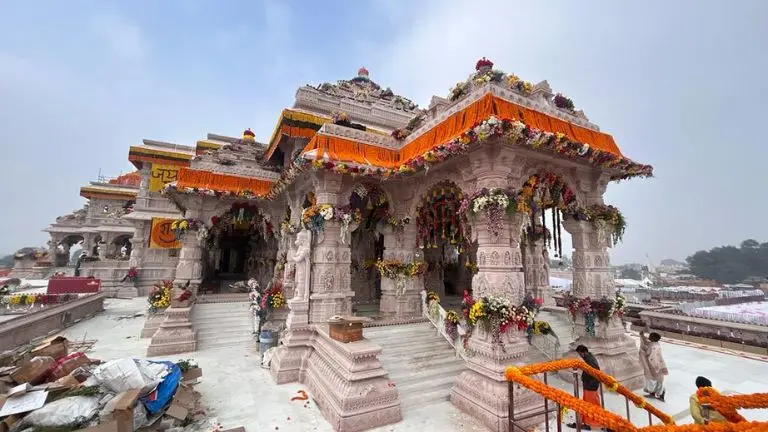
Ayodhya holds immense significance because it is the birthplace of Lord Rama and also the capital of the Kosala kingdom that has been mentioned in the Ramayana. For thousands of years, this city has been the epicenter of political, cultural, and religious activities. As per the archaeological findings and ancient texts, it has come to notice that this city has been under the control of rulers from different dynasties, which contributed to its overall development. Here are some key highlights of the history of Ayodhya:
Historical Highlights
- Ayodhya was ruled by King Dasharatha, the father of Lord Rama.
- As per the ancient texts like the Ramayana and Puranas, Ayodhya is described as a very well-planned city with huge palaces and advanced infrastructure.
- Various dynasties like the Mauryas, the Guptas, and later medieval rulers ruled here and contributed to the development of the city’s architecture and culture.
- Despite political shifts and invasions damaging its buildings and historical sites, Ayodhya continued to be a significant pilgrimage site over the ages.
- Excavations and archaeological research show ongoing patterns of settlement, confirming its status as one of the world’s oldest cities still in existence.
Major Tourist Attractions in Ayodhya
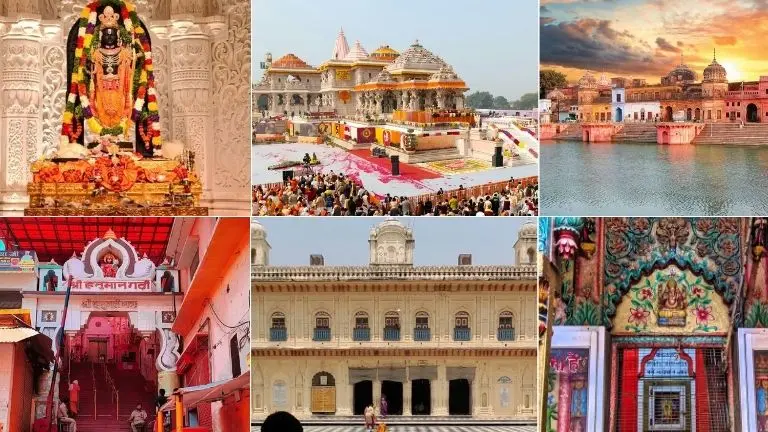
Ayodhya is a place where one can indulge oneself in complete spiritualism. The city provides access to a range of religious sites, historical attractions, and serene places. For first-time visitors, here are some of the best tourist places to visit in Ayodhya:
1. Ram Janmabhoomi
The site serves as Ayodhya’s main religious location, which people consider to be Lord Rama’s real birthplace. The new temple complex attracts numerous religious visitors from all across the world. This tourist attraction provides a complete spiritual environment, along with essential safety measures and facilities for visitors. Therefore, it is a must-visit destination when in Ayodhya.
- Timings: Generally open from early morning to evening (approx. 7 AM – 7 PM)
- Note: High security; follow entry rules and expect crowds
2. Hanuman Garhi
The temple dedicated to Lord Hanuman stands at the top of the hill in Ayodhya. To access the shrine, visitors must ascend approximately 76 steps. It is believed that Hanuman protected Ayodhya here, which is why devotees visit here to seek strength, protection, and blessings before visiting other temples.
- Timings: Around 5 AM – 10 PM
- Tip: Visit early morning to avoid heavy crowds
3. Kanak Bhawan
Kanak Bhawan is a famous temple in Ayodhya that is dedicated to Lord Rama and Goddess Sita. Here, people can see exquisite idols which incorporate artistic designs and are decorated with gold jewelry. According to legend, Queen Kaikeyi gave this as a gift to Sita after her marriage. This is why it is a pure symbol of love and devotion.
- Timings: Around 8 AM – 12 PM & 4 PM – 9 PM
- Highlight: Known for its detailed decorations and calm environment.
4. Sarayu River Ghats
Sarayu Ghats are situated near the Sarayu River and serve as the best place for religious rituals like bathing and attending evening aartis. Many people believe that taking a holy bath in this river will wash off their sins. Therefore, people who want to experience a peaceful environment and witness extensive spiritual ceremonies are attracted to this destination.
- Best Time: Early morning or evening aarti
- Tip: Maintain cleanliness and follow safety near water
5. Nageshwarnath Temple
Nageshwarnath Temple is an ancient temple which is dedicated to Lord Shiva. This temple is believed to have been established by Kush, who was the son of Lord Rama. This temple holds immense significance and plays a key role during festivals like Shivratri. This temple reflects Ayodhya’s multi-religious spiritual heritage and must be visited during your Ayodhya Tour.
- Timings: Around 5 AM – 9 PM
- Best Visit: During Maha Shivratri for special Pooja
Festivals Celebrated in Ayodhya
People from all across the world visit Ayodhya, especially to experience the grand festival celebrations that the city upholds. Here are some of the significant festivals that you must experience in Ayodhya:
1. Diwali
The city celebrates Diwali as Lord Rama’s return to Ayodhya by lighting up the entire city with millions of lamps. The entire city experiences a magical atmosphere as grand aartis, cultural events, and firework displays take place. Therefore, if you ever want to come to Ayodhya during the festive season, make sure to plan your tour during Diwali.
2. Ram Navami
This festival celebrates the birth of Lord Rama. At various temples in Ayodhya, devotees assemble to perform prayers, chant hymns, and join processions that honor his life and teachings. This is another significant festival that is celebrated extensively in Ayodhya.
3. Dussehra

Dussehra commemorates Lord Rama’s defeat of Ravana. The main attractions of Ayodhya include its Ramleela dramatic performances and the ceremonial burning of Ravana’s effigy.
4. Makar Sankranti
The holy festival includes sacred bathing in the Sarayu River by devotees. The festival marks the sun’s transition and includes prayers, charity, and community gatherings along the ghats.
5. Shravan Jhula Mela
The festival features Lord Rama and Sita idols, which people place on decorated swings. During the rainy season, devotees engage in temple visits, songs, and rituals at the temple.
6. Kartik Purnima
During the Kartik Purnima, devotees assemble at the river to perform holy baths and to participate in the evening lamp offering. The ghats experience a serene atmosphere because of the beautiful lighting and spiritual power.
How to Reach Ayodhya
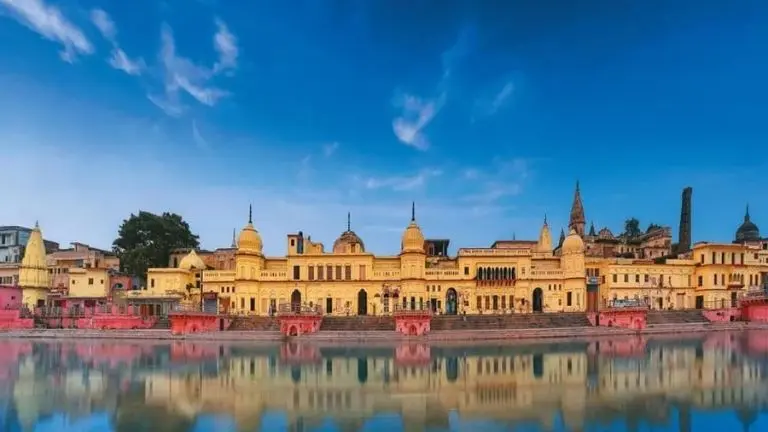
Ayodhya has multiple transportation systems that allow people from all parts of India to reach the city. Here is how you can reach the city through various modes of transportation:
1. By Air
Maharishi Valmiki International Airport connects Ayodhya to major cities with regular domestic flights and modern facilities for travelers. Therefore, if you want convenient travel, you can opt for an air route to Ayodhya.
2. By Train
Ayodhya Dham Junction offers good rail connectivity with major cities like Delhi, Varanasi, and Lucknow, which further makes train travel convenient. It is also an economical way of travel for those looking to save on their budget.
3. By Road
Ayodhya is connected via national highways with regular buses, taxis, and private vehicles available from nearby cities like Lucknow, Gorakhpur, and Prayagraj.
Best Time to Visit Ayodhya
The best time to visit Ayodhya is between October and March, when the weather is pleasant and suitable for sightseeing. The temperatures during this time period remain at comfortable levels which helps people to visit temples and ghats without any disruptions. The cooler months of winter feature two important festivals, Diwali and Ram Navami, which provide visitors with a rich cultural experience. The combination of extreme summer heat and monsoon season brings moderate rainfall, which can further disrupt travel plans.
Travel Tips for Visitors
Before visiting Ayodhya, it is helpful to keep some practical tips in mind for a smooth and respectful travel experience. Here is what you need to consider:
- Dress modestly as Ayodhya is a religious city, and temples expect visitors to follow traditional clothing and respectful behavior.
- Visitors should go to temples in the early morning to experience the peaceful atmosphere while they wait for darshan and rituals to begin.
- You need to carry cash because smaller shops and local vendors in some areas do not accept digital payments or credit cards.
- You need to follow local regulations and security procedures that apply to all areas, including the vicinity of Ram Janmabhoomi, a major religious site.
- Stay hydrated and wear comfortable footwear as exploring temples and ghats requires significant walking throughout the day.
- People should show respect for religious traditions and remain silent while keeping sacred spaces and public areas clean.
Conclusion
Ayodhya is a significant city that serves as a permanent representation of Indian faith, historical heritage, and cultural traditions. Every aspect of Ayodhya shows its spiritual wealth because of its strong ties to Lord Rama, its ancient temples, and its lively celebrations. The city exists as a perfect union between traditional values and contemporary progress, which creates an inviting environment for visitors from all across the world. Therefore, Ayodhya provides both pilgrims and history enthusiasts with a valuable experience that lasts with them forever.
Also Read – Top Places to Visit in Ayodhya: A Must-See Guide