
The Great Himalayas offer a world-class camping and trekking experience. From the 5-day moderate Hampta Pass Hike to the more than 20-day adventurous expedition of Kanchenjunga. The key regions in Nepal and India are highly preferred, offering local culture with spectacular views.
The Great Himalayas, being the world’s highest mountain range, are home to some of the most highly preferred trekking and camping locations in the world. Spanning 2,400 km across India, Pakistan, China, Nepal, and Bhutan, this abode of snow is a young mountain range that offers unique trekking and camping experiences, attracting millions of travelers every year.
Table of Contents
Introduction to Camping & Trekking in the Himalayas
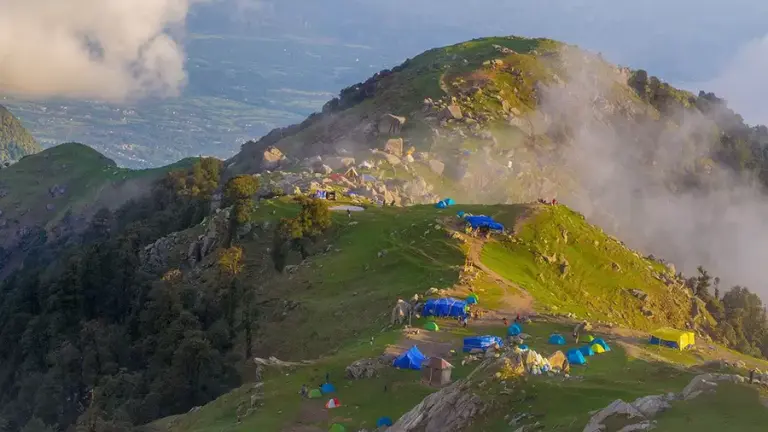
The Himalayas host many prominent trekking and camping sites with diverse landscapes, flora and fauna, cold deserts, alpine meadows of Uttarakhand, and stunning glacier views in Nepal. With over 3,000 officially named mountain peaks, the Himalayas began forming 40 to 50 million years ago due to the collision of the Indian and Eurasian plates, and grow 0.5 to 1 cm every year.
Moreover, the Himalayas have been serving as a major trekking and camping destination for travelers worldwide. Featuring rugged trails with alpine meadows and high-altitude landscapes, it is no less than a heaven on earth.
Here is how trekking and camping are experienced in the Himalayas:
- Trekking in the Himalayas: Trekking in the Himalayas is often referred to as an adventurous retreat for travelers. Ranging from easy walks to moderate level, and advanced trekking, the popular options include Kedarkantha, Ali Bugyal, and Triund.
- Camping in the Himalayas: Camping in the Himalayas offers an unparalleled experience to adventure and astronomy lovers. Under the sky where stars and the Milky Way are painted on the canvas of a dark carpet called the universe, you get to see what a wonder our universe is.
Popular Trekking Destinations
The Great Himalayas are abundant with popular trekking destinations, with each offering something unique, something that was there but never experienced by many travelers. No, not yeti or some mystical creature, it’s actually the profound feeling of being in the present.
Here are some of the popular trekking destinations that you may wish to consider:
1. Everest Base Camp (EBC)
Everest Base Camp (EBC) is recognised as a legendary trekking destination among trekkers and travelers. Established more than 70 years ago, in 1953, it is situated in Nepal and offers an adventurous trek of around 128 km to 5,364 meters above sea level.
This trek falls under the moderate-to-difficult category and starts from Lukla to the Everest Base Camp (EBC) in Kathmandu, taking 12 to 15 days.
2. Annapurna Base Camp (ABC)
The Annapurna Base Camp (ABC) trek, starting from Nayapul or Ghandruk and ending in Pokhara, offers a classic 7 to 12-day journey in Nepal. Commonly recognised as the Annapurna Sanctuary, it offers a 360-degree view of the Himalayan peaks, including the 10th-highest mountain in the world, Annapurna.
Located at an altitude of 4,130 meters, it is a moderate-to-challenging level trek with numerous ancient staircases on ascents and descents.
3. Hampta Pass Trek (Himachal Pradesh)
Hampta Pass Trek is one of the most famous adventurous treks in Himachal Pradesh. While linking the Kullu Valley to the barren landscapes of Spiti, it features a dramatic change in the landscapes, from meadows and forests to snow-covered passes and barren lands.
Located in the Pir Panjal range, this trek is categorised under an easy to moderate difficulty level, which starts from Jobra and ends at the Base Camp, Manali.
4. Goechala (Sikkim)
Goechala, in Sikkim, is another popular trekking destination in the Great Himalayas. Offering the majestic view of the southeast face of the 3rd-highest mountain in the world, Mount Kanchenjunga, it is a 10 to 11-day trek with a difficulty level of expert trekking.
Being a challenging or advanced-level trek, Goechala starts from Yuksom, passes through Kanchenjunga National Park, dense forests, and rhododendron valleys, to the challenging yet trek-worthy ascent to the pass.
5. Kedarkantha Trek (Uttarakhand)
Kedarkantha Trek stands as one of the most visited trek destinations in the Himalayas, due to its beginner-friendliness and trek distance covering a 20 to 23 km beautiful journey. The trek starts and ends in Sankri Village, covering dense pine forests and snow-covered meadows.
If you want to experience the 360-degree views of the world-famous golden peak views of the Garhwal Himalayas, choosing the Kedarkantha Trek is your not-to-miss chance.
Best Camping Spots in the Himalayas
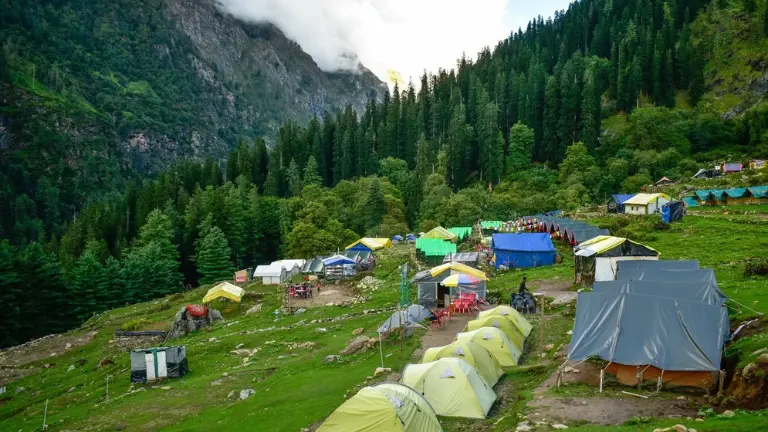
The camping spots in the Himalayas are what travelers call their home far away under the starry night. Located at high altitudes from 1,300 to 5,000 meters above sea level, these spots feature closed canopies of the pine forests, valleys with an abundance of nature and ecological variety.
Here are some of the most popular cannot be missed camping spots in the Himalayas:
1. Triund (Himachal Pradesh)
After an easy-to-moderate level trek, Triund, located at around 2,828 meters, is a famous and beginner-friendly camping site in Himachal Pradesh. With stunning views of the Dhaluandar range and Kangra Valley, the location provides pre-set camp facilities to travelers who are not familiar with camping.
2. Tirthan Valley (Himachal Pradesh)
Tirthan Valley, located in Himachal Pradesh, serves as an offbeat camping destination. Being popular for the tranquil riverside camping experience, this destination is situated alongside the Great Himalayan National Park, offering a break into the diverse Himalayan flora and fauna.
3. Sangla Valley, Himachal Pradesh
Sangla Valley, for travelers who want an escape from the bustling life of the city, is a riverside peaceful retreat. Offering the breathtaking views of the Kinner Kailash, this camping destination is highly visited to witness the high green slopes, apple orchards, and peaceful Himalayan landscapes.
4. Solang Valley, Himachal Pradesh
Situated on the banks of the Beas River, Solang Valley in Himachal Pradesh is not only a premier destination for camping, but an adventurous spot for paragliding as well. Featuring lush meadows and snowy landscapes in the winter season, you can experience various activities, including zorbing, bonfires, and river crossing.
5. Kasol, Himachal Pradesh
Often referred to as a summer retreat by the domestic Indian travelers, Kasol is among the top destinations featuring camping experience in Himachal Pradesh, amidst the Himalayas. Situated along the Parvati River, Kasol blends pine forests, snowy peaks, and riverside camping, making it overall distinctive for the campers.
Types of Treks in the Himalayas
There are several types of treks available for your adventurous Himalayan journey. From easy to difficult and submit treks, they make the experience more enjoyable and memorable.
Here are the types of treks available:
- Easy or Beginner-Friendly Treks: Kedarkantha Trek, Dayara Bugyal Trek, and more.
- Moderate Treks: Hampta Pass Trek, Kuari Pass Trek, Valley of Flowers Trek, and others.
- Advanced Treks: Kalindi Khal Pass Trek, Auden’s Col Trek, Bali Pass Trek, and more.
- Summit Treks: Kedarkantha Trek, Brahmatal Trek, Bhrigu Lake Trek, and so forth.
- Circuit Treks: Dhauladhar 7 Lakes Trek, Annapurna Circuit Trek, Markha Valley Trek, and others.
- Alpine Lake Treks: Roopkund Trek, Chandratal Lake Trek, Brahmatal Trek, and others.
- Teahouse Treks: Everest Base Camp (EBC), Annapurna Base Camp (ABC), Langtang Valley Trek, and others.
- Glacial Adventure Treks: Pindari Glacier Trek, Kafni Glacier Trek, Milam Glacier Trek, and so forth.
Best Time for Camping & Trekking
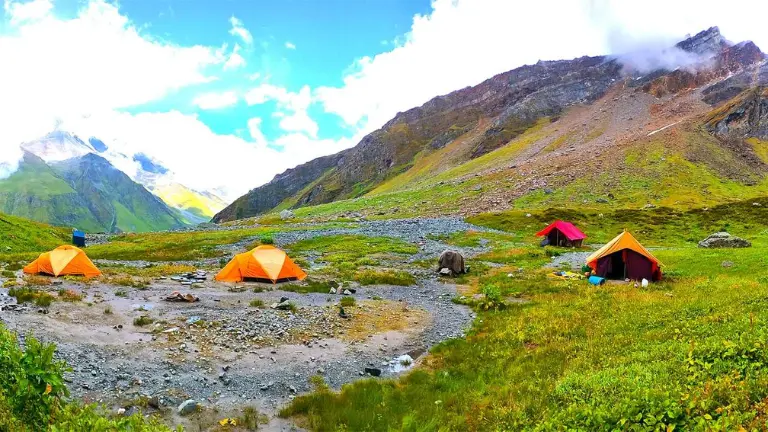
The ideal time for camping and trekking in the Himalayan region is considered between the Autumn season, from September to November, when the weather stays cool and stable. The spring season from March to May is the best time to experience blooming flowers and vibrant landscape beauty.
Below is a table with seasons, months, and their weather conditions:
| Season | Months | Best For | Typical Conditions |
| 1. Autumn | Sep to Nov | Clear skies, panoramic mountain views, and ideal trekking conditions. | Stable weather, crisp air, excellent visibility, and cold nights. |
| 2. Spring | March to May | Blooming rhododendrons, scenic landscapes, and beginner-friendly treks. | Comfortable daytime temperatures, cool nights, and colorful flora. |
| 3. Summer | June to Aug | High-altitude treks in regions like Himachal Pradesh and Kashmir. | Pleasant at higher altitudes, but heavy monsoon rains and landslides at lower elevations. |
| 4. Winter | Dec to Feb | Snow trekking with adventure camping for experienced trekkers. | Extremely cold, snowfall is common, harsh conditions, and fewer crowds. |
Essential Gear for Trekking
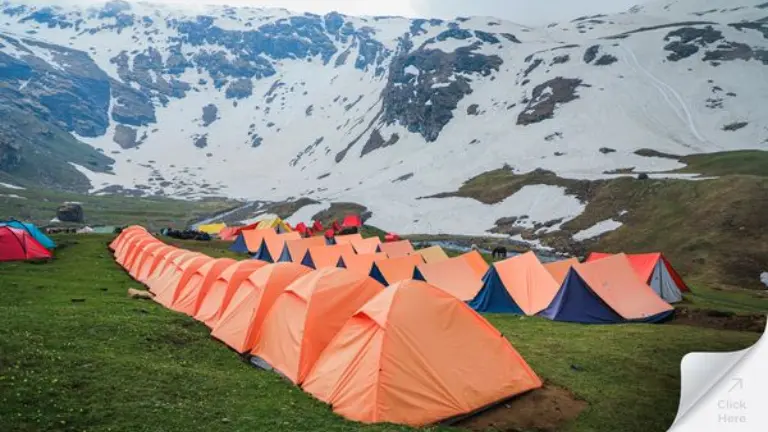
Packing for the essential gear is non-negotiable and should be done extensively after trek and camping planning. Here is the essential gear that you must not forget for your trekking and camping:
| Category | Item | Why Carry Them? | Notes |
| 1. Clothing (Layering) | Base layers (thermal innerwear) | Keeps you warm | Go for moisture-wicking but avoid cotton. |
| Insulating layer (fleece and down jacket) | Traps body heat | Down is warmer, and fleece works in damp. | |
| Outer shell (waterproof jacket) | Shields from the weather | Must be windproof and waterproof. | |
| Trekking pants | Easy movement | Quick-dry fabric works best. | |
| Gloves, cap, and woolen socks | Protects from cold | Always carry extra pairs. | |
| 2. Footwear | Trekking shoes | Grip and support | Break them in before the trek. |
| Camp shoes | Comfort at camp | Lightweight and optional | |
| 3. Backpack | 40L to 60L backpack | Carries your gear | Good support and rain cover are needed. |
| Daypack (optional) | For short hikes | Useful for light essentials | |
| 4. Sleeping Gear | Sleeping bag | Keeps you warm at night | Should handle sub-zero temperatures. |
| Sleeping mat | Insulates from the ground | Helps retain body heat | |
| 5. Hydration & Food | Water bottles and a hydration pack | Keeps you hydrated | Carry at least 2 to 3 liters |
| Water purification tablets and a filter | Makes water safe | Important in remote areas | |
| Energy snacks | Quick energy | Nuts, bars, and chocolates also work well. | |
| 6. Navigation & Safety | Map and GPS device | Helps with direction | Don’t depend only on the phone. |
| First aid kit | Handles minor issues | Include altitude meds (doctor advised) | |
| Headlamp or torch | Night visibility | Keep extra batteries | |
| Multi-tool | Handy utility | Keep it small and practical | |
| 7. Personal Items | Sunscreen, sunglasses | Protects from UV | SPF 50+ is a must |
| Toiletries | Basic hygiene | Keep it minimal | |
| Trekking poles | Reduces strain | Great for descents | |
| 8. Documents and Extras | ID, permits | Required documents | Keep waterproof copies |
| Power bank | Charges devices | Power is limited in the mountains |
Safety Tips for Trekkers
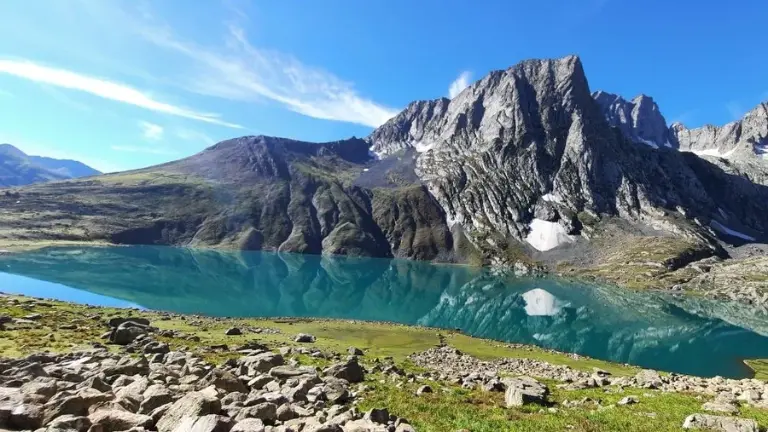
Here are the necessary safety tips for the trekkers planning an adventurous journey in the Himalayan region:
- Ascend slowly to make your body comfortable with the high altitude.
- Consider hiring professionals or experienced local guides.
- Make sure you pack proper gear and layering to keep you warm.
- Always stay hydrated and nourished.
- Stay with the group you are travelling with and stick to trails.
- Keep the essential safety equipment with you, always.
- Do not consider trekking for a longer stretch at the start if you are a beginner.
- Do not forget to check the weather and forecasts before planning the trip.
- Inform someone of your plan, the route you may take, and the group or travel agency you are going with.
- Having trekking gear essentials with you makes the ascent easier.
Environmental Responsibility
While discussing trekking and camping experiences in the Himalayan regions, we should not forget the concerns regarding environmental safety. It is important to understand that trekking and camping in the Himalayas come with a shared responsibility, as tourism increases in the mountain range.
Moreover, to protect the Himalayan wildlife and the fragile mountain ecosystem, we should take essential steps, including carrying our waste, avoiding plastic bags, respecting the local culture, and avoiding throwing away any kind of waste, especially materials containing plastic or non-biodegradable materials.
In summary, the Himalayas are not merely a mountain range stretching 2,400 to 2,500 across 5 countries. It is a wonder of Mother Nature, its her. And, she has nourished this beauty for millions of years, not for us to damage in any way, but to cherish with our love, gratitude, and respect.
Conclusion
The Great Himalayas are home to several trekking adventures and camping retreats. For decades, the region has served as one of the most visited destinations in the world by adventurers, explorers, and seekers of the self. Through the pristineness of pine forests, meadows, and lush landscapes, you get to experience the unseen and raw beauty of the mountains.
Therefore, here we discussed exactly how you can experience trekking and camping in the Himalayas, no matter whether you are a beginner explorer or an expert. We also walked through the top location to consider essential gear and safety tips to keep in mind.
Also Read – Gokarna Beach Trek: Ultimate Guide for Trekking & Camping Lovers