
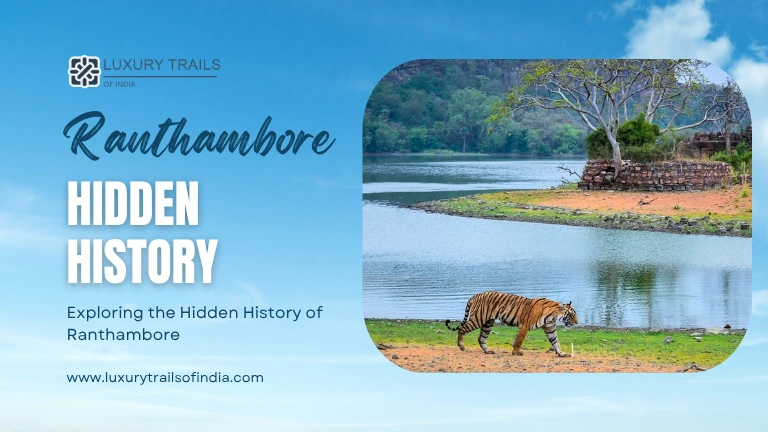
Ranthambore’s history spans over 1,000 years. It began as a Chauhan Rajput fort in the 10th century, survived sieges by the Delhi Sultans and Akbar’s Mughal army, became a royal hunting ground for the Jaipur kings, and turned into a protected tiger reserve in 1973. This past still shapes everything you see on a Ranthambore safari today.
Most people come to Ranthambore hoping to see a tiger. But the history of Ranthambore holds a bigger story. Kings fought and died here. Queens made painful choices to protect their honor. Emperors laid siege with thousands of soldiers on the same soil where tigers now roam freely. Choosing a resort in Ranthambore means choosing a base camp for exploring a thousand years of Rajasthan’s past, not just a place to sleep.
Table of Contents
Why Ranthambore’s History Matters to Your Stay
Knowing the history changes how you see the park. That lake your jeep passes was once used by royal hunting parties. That hill you photograph at sunrise holds a fort that refused to fall for over a year. A Ranthambore Resort gives you the comfort to take it all in slowly, mixing morning safaris with afternoon fort visits instead of rushing.
The Rise of Ranthambore Fort: A Chauhan’s Fort
The story starts with King Sapaldaksha of the Chauhan dynasty, who built the first version of the fort in the mid-10th century on a hill about 700 feet high. Later rulers kept adding to it. Thick forest and steep rock surrounded the hill, making it hard to approach. This is why the fort earned a name for being nearly impossible to capture.
Who Ruled Ranthambore? The Fort’s Changing Dynasties
Power here changed hands often. The Chauhans held it first. Muhammad Ghori’s forces took it after defeating Prithviraj Chauhan in 1192. Delhi Sultan Iltutmish captured it in 1226, but the Chauhans won it back after his death. This pattern repeats through the History of Ranthambore: a new ruler arrives, holds the fort a while, then loses it. Hada Rajputs of Bundi, Mewar kings, the Mughals, and finally Jaipur’s Kachwaha rulers all took their turn.
The Khilji Campaign: Blockade, Sacrifice and the Fall of Ranthambore
In 1299, King Hammiradeva sheltered a rebel general fleeing Sultan Alauddin Khilji. Khilji did not forgive this. His army besieged the fort in 1301, and fighting dragged on for months. When defeat became certain, legend says the royal women chose jauhar, a mass act of self-sacrifice, over surrender. The story turned Ranthambore into a symbol of Rajput courage, spoken about alongside the siege of Chittorgarh.
Akbar’s Defeat and the Mughal Chapter
By 1568, Ranthambore was the capital of Bundi state, guarded by Rao Surjan Hada. Fresh from a brutal win at Chittorgarh, Akbar sent 5,000 soldiers to surround the fort, then arrived himself with over 30,000 men and some of the largest cannons the Mughals had built. This siege ended differently. Rao Surjan Hada negotiated terms and joined the Mughal court, keeping some control over his land.
Ranthambore’s Later History
After Akbar’s conquest, Ranthambore settled into a quieter chapter. It fell more and more under the powerful influence of the Kachwaha Maharajas of Jaipur, one of the strongest Rajput houses in Southern Rajputana. It eventually stopped being a battlefield and gradually converted into a royal retreat. Today, it has been associated with the Jaipur court’s identity for centuries.
What Was Life Like in Ranthambore Fort?
Wars get most of the attention, but everyday life inside the fort tells its own story.
What Did People Eat?
Food followed the dry climate around the fort. Roti made from local grains, pulses, and vegetables formed the daily diet, along with milk products. Game meat (meat from wild animals) and wild birds appeared on the table in season, since hunting was part of royal life.
What Games Did They Play?
Chess was popular among princes and common people alike. Wrestling was another favorite, valued for training as much as sport. Horse riding contests and archery kept nobles and soldiers sharp during peacetime.
Hunting, Horsemanship and Martial Skills
Rajput boys trained in swordplay, horse riding, and hunting from a young age. These were not hobbies. They were survival skills tied to a code built on valor and honor. Even Rajput girls learned to ride, sometimes without a saddle.
Daily Life, Religion and Festivals
A fort held palaces, temples, water tanks, and courtyards where kings held court. Mornings meant prayers and meetings; evenings meant training and gatherings, with queens said to have watched the sunset from palace balconies. Temples sat at the heart of it all, and festivals brought music, dance, and large community gatherings.
Trinetra Ganesh Temple: The Fort’s Living Legend
Inside the fort stands one of India’s oldest Ganesha temples, built from red Karauli stone. Legend says that during Hammiradeva’s siege in 1299, food supplies were running low, and Lord Ganesha appeared in a dream to offer reassurance. The temple was built out of gratitude. Even today, thousands of wedding invitations arrive here by post each year, addressed straight to the deity, making it one of the few temples in the world that receives mail this way.
What Still Survives Inside Ranthambore Fort
Walk through the fort today and real pieces of this history still stand. Seven grand gates, called pols, guard the entry points, including Hathi Pol and Delhi Pol. Structures like Bada Mahal, Hammir Court, and Phansi Ghar remain, along with old stepwells and water tanks; the same stone kings and soldiers once walked past.
From Royal Hunting Ground to Wildlife Sanctuary
For centuries, this forest was reserved for royal hunts. Under the Maharajas of Jaipur, and later alongside British officers, hunting here was treated as a mark of status. Padam Talao and the fort’s palace balconies, both peaceful spots today, once hosted hunting parties tracking tigers and deer through the same forest safari jeeps now travel.
From Hunting Reserve to Tiger Reserve: 1955-Present
Change began in 1955, when the area became the Sawai Madhopur Game Sanctuary, an early step toward protection. The bigger shift came in 1973, when Project Tiger launched under Prime Minister Indira Gandhi, and Ranthambore was named one of the first reserves in the country. It became a national park in 1980. Between 1973 and 1979, 12 villages moved out of the park to reduce human pressure on the forest, a difficult but defining part of its story.
Machli: The Tigress Who Made History Roar Again
No history of Ranthambore feels complete without Machli, also called T-16. Born in 1997, she got her name from fish-shaped markings near her face. She ruled the fort and its lakes for nearly 20 years and she was nicknamed “Lady of the Lakes” after a widely known fight with a 14-foot crocodile. She became the most photographed tigress in the world, and between 1998 and 2009 her fame is credited with bringing close to 100 million dollars in tourism income to the region. She died in 2016 at age 20 and was honored with a postage stamp. Her descendants, including the tigress Arrowhead, still rule these forests.
The People Behind the Forest: Communities, Livelihoods and Conservation
Ranthambore’s story is not only about kings and tigers. Local communities live alongside the reserve, and their support matters for conservation to work. Many families who once lived inside the park moved to nearby areas, a shift that brought real hardship for some. Today, many residents work as safari guides, drivers, naturalists, and hotel staff, and community groups help monitor tiger movement and reduce conflict with wildlife.
Where to Stay When Exploring Ranthambore’s History
With this much history packed into one area, where you stay matters. Ranthambore Tiger Machan is close to the fort, the temple, and the safari zones, so you spend less time traveling and more time exploring. Start the morning with a safari, spend the afternoon walking through centuries-old gates, and end the day relaxed at a resort built for this kind of trip.
Also Read: Ranthambore National Park Rajasthan