

Sabarimala darshan requires online booking through Sabarimala Online Virtual Queue. The temple is open during the peak Mandala-Makaravilakku season from mid-November to mid-January, from 3 AM to 1 PM and from 3 PM to 11 PM. The pilgrims must keep a 41-day fast, wear black or blue clothes, and carry the Irumudi.
Sabarimala Temple is perceived more as a symbol of absolute surrender, discipline, and equality than just being a pilgrimage site. Upon having darshan of Lord Ayyappa here, it is believed that one can transform his or her life and experience its true essence. Therefore, immerse yourself completely in the darshan of Lord Ayyappa through this guide, discussing the temple’s significance, rules to follow, dates, and timings.
Table of Contents
What are the Timings of the Sabarimala Temple?
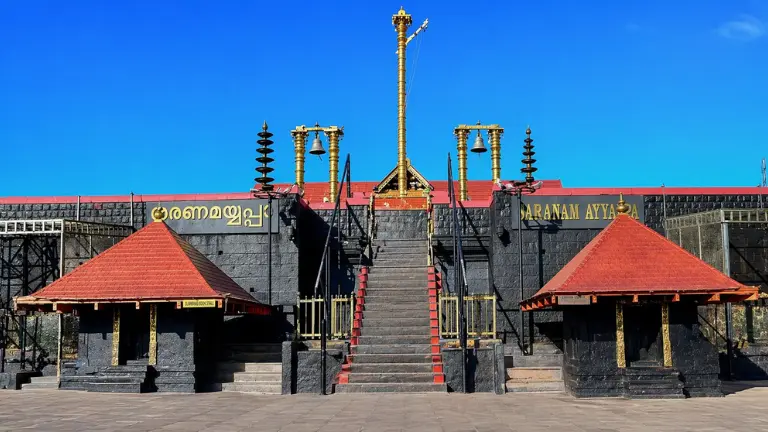
The timings for the darshan at the Sabarimala Temple vary according to regular day visits, visiting during the mandala puja, Makaravilakku festival, and darshan, pooja, and nada.
Here are the timings for the Sabarimala Temple darshan:
| Timing Category | Ritual and Event | Time |
| Regular Days | Morning Darshan | 3:00 AM to 5:00 AM |
| Mid-Morning Darshan | 10:00 AM to 11:00 AM | |
| Mandala Pooja Timings | Temple Opening | 3:00 AM |
| Neyyabhishekam | 3:30 AM to 7:00 AM | |
| Neyyabhishekam (Second Slot) | 8:30 AM to 11:00 AM | |
| Ucha Pooja (Noon) | 1:00 PM | |
| Evening Opening | 3:00 PM | |
| Deeparadhana | 6:30 PM | |
| Harivarasanam | 11:00 PM | |
| Makaravilakku Festival Timings | Makara Jyothi Darshan | 3:13 PM to 6:30 PM |
| Morning Darshan | 3:00 AM to 1:00 PM | |
| Neyyabhishekam | 3:30 AM to 11:00 AM | |
| Evening Darshan | 3:00 PM to 11:00 PM | |
| Deeparadhana | 6:30 PM to 6:45 PM | |
| Pushpabhishekam | 6:45 PM to 9:00 PM |
What are the 2026 Dates of the Sabarimala Temple?
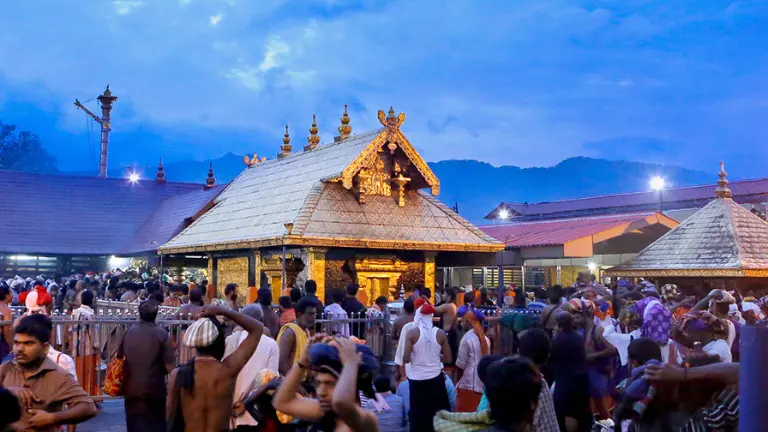
Below are the dates of the Sabarimala Temple darshan, as of May 2026:
| Month | Type of Pooja | Opening Date | Closing Date |
| May 2026 | Monthly Pooja (Edavam) | 14 May 2026 | 19 May 2026 |
| Idol Installation Pooja | 25 May 2026 | 26 May 2026 | |
| June 2026 | Monthly Pooja (Mithunam) | 14 June 2026 | 19 June 2026 |
| July 2026 | Monthly Pooja (Karkadakam) | 16 July 2026 | 21 July 2026 |
| August 2026 | Monthly Pooja (Chingam) | 16 Aug 2026 | 21 Aug 2026 |
| Onam Festival | 24 Aug 2026 | 28 Aug 2026 | |
| September 2026 | Monthly Pooja (Kanni) | 16 Sep 2026 | 21 Sep 2026 |
| October 2026 | Monthly Pooja (Thulam) | 17 Oct 2026 | 22 Oct 2026 |
| November 2026 | Sree Chithira Atta Festival | 6 Nov 2026 | 7 Nov 2026 |
| Mandala Season | 16 Nov 2026 | 27 Dec 2026 | |
| Dec 2026 – Jan 2027 | Makaravilakku Season | 30 Dec 2026 | 20 Jan 2027 |
What is the Significance of the Sabarimala Temple and Darshan?
Sabarimala Temple is situated on the hilltop of the Kerala Periyar Tiger Reserve, where nature breathes, and pilgrims take spiritual refuge, surrounded by rich flora and fauna.
As highly respected and visited by around 1 to 1.5 crore (10 to 15 million) devotees every year, Sabarimala Temple holds immense significance as a pilgrimage site for not only the Hindu community, but also for people who believe in Lord Ayyappa.
Here is why the Sabarimala Temple encounters immense devotion among the people:
1. Spiritual Transformation
The Sabarimala Temple, like any other Hindu temple, is believed to be a place where devotees start a new life. By following strict rules, they lead their life towards spirituality.
This spiritual transformation, in the school of Indian thought or Indian culture, is referred to as the rebirth (while living) or rebirth of a soul.
2. Equality and Unity
The temple does not discriminate against devotees based on their social status, caste, or distinctions created by society. Everyone, with a different colour or belief, is welcome here. Also, devotees call each other Swami or the master of oneself.
3. The 41-Day Vratham
Pilgrims who visit the temple for darshan follow a 41-day vratham, including strict discipline, celibacy, vegetarianism, and dressing in black or blue clothes. These steps are essential before darshan and are believed to purify oneself internally and externally.
4. Neiyyabhishekam
Inside the garbhagriha, or the place where the Lord Ayyapa is placed and consecrated, you will notice that devotees are offering Irumudi Kettu (a white bag with coconut and ghee).
This is widely recognised as the abhishekam, which symbolises the unity of the soul with the universal soul.
5. Pathinettampadi
Pathinettampadi, or the 18-sacred steps, has been a crucial ritual to have the darshan of Lord Ayyappa. Also, apart from darshan, the 18-step holds profound teachings of Indian culture about self-realisation.
- First 5 Steps: They symbolise the 5 senses: sight, sound, smell, taste, and touch.
- Next 8 Steps: They symbolise the 8 passions or Ashtaragas: Kama, Krodha, Lobha, Moha, Madha, Matsarya, Asuya, and Dhumb.
- Next 3 Steps: These steps are symbols of the 3 Gunas or qualities: Satva, Rajas, and Tamas.
- Remaining Steps: Dedicated to Vidya (knowledge) and Avidya (ignorance).
Interesting Fact: These 18 steps are frequently associated with the 18 Puranas, chapters of the Bhagavad Gita, and the 18 hills Sabarimala is surrounded by.
6. Makaravilakku
Every year, it is believed that a sacred Makara Jyothi appears on the day of Makara Sankranti by itself, which attracts pilgrims through its mystery.
What are the Rules to Follow During Sabarimala Darshan?
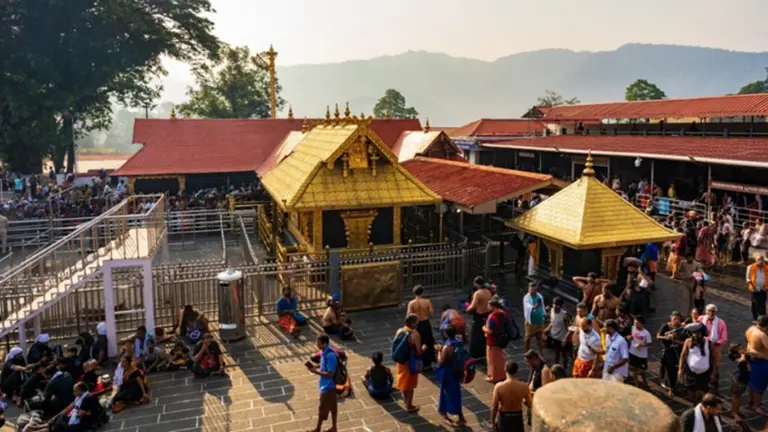
Here are the most important rules that one must follow before darshan at the Sabarimala Temple:
- The 41-day vritham or fast must be undertaken with the permission of the parents or the Guru.
- The person who is taking on vritham must offer prayers to their kula devata or family deity, and offer a yellow cloth with coins.
- The devotees, those who are taking on a fast, must be shaved, have their nails clipped, and have their hair trimmed.
- Placing the holy garland covered in chandan or sandal paste is necessary to be placed in front of Lord Ayyappa according to the rituals.
- The devotees should wear only new clothes, and those should be a dhoti and a shawl, the traditional attire that has been widely a part of daily lives across South India.
- Before the day of temple darshan, the devotee (who has taken on vritham) must wake up early, pray and offer the sacred garland to the family deity. Then, the Guru will walk by them to the temple and accept the garland.
- During the vritham (fast), the devotee must let go of every social activity and dedicate life to praying to Lord Ayyappa, meditation, singing bhajans, performing temple seva, feeding the needy, helping others, and attending spiritual scripture reciting.
- The devotee, if eating non-vegetarian, must restrain themselves from doing so. And, eat only vegetarian food for the next 41 days. Other things include giving up alcohol, violence of any kind, and tobacco.
- During the fast, the devotee is advised to walk barefoot, to sleep without a pillow (signifying giving up comfort) on the ground, making a wooden block their pillow.
- Every person is the embodiment of Lord Ayyappa himself: keeping this in mind, the devotee must treat everyone in the same way.
- If the devotee is privileged, they must not use it as a convenience and show others their comforts, but be humble and respectful.
- On strictly following celibacy, he must treat every woman as his mother.
- The devotee must restrain themselves from oiling their body, while keeping a Tulsi leaf with them as a reminder to watch over their bad and negative thoughts.
Conclusion
Kerala’s Sabarimala Temple holds the immense devotion of pilgrims. Lord Ayyappa, who is highly revered as the celestial saviour of Kaliyug, signifies that, by intense discipline, humbleness, and righteousness, you can reach the ultimate goal, moksha or Lord Ayyappa. Therefore, stop waiting for when the Lord will call you for darshan and surprise him instead.
Also Read – Ramdara Temple in Loni Kalbhor: A Peaceful Escape Near Pune