
Ranthambore National Park is one of the most famous wildlife parks in India, situated in the Sawai Madhopur district of Rajasthan. It is just 180 km away from Jaipur, which makes it easy for Jaipur tourists to plan a visit here. The park is huge and covers an area of approximately 1,334 square kilometers, including forests, lakes, and ancient ruins. Such factors make it a must-visit destination in Rajasthan.
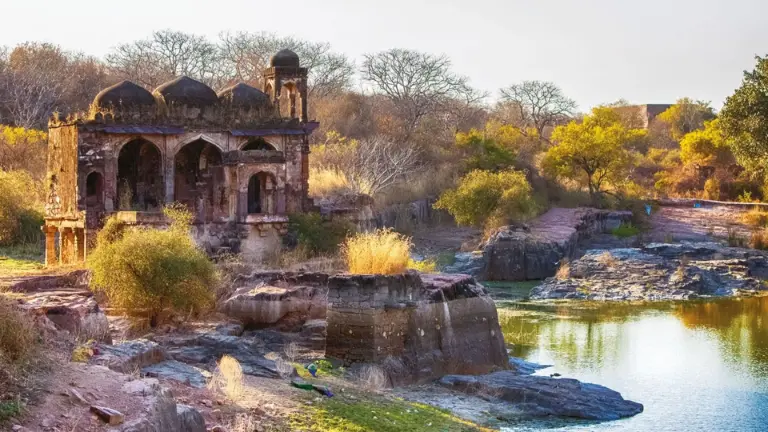
Moreover, in ancient times, Ranthambore was once a royal ground that was used by the Maharajas of Jaipur for hunting purposes. However, today, it is a protected area and a popular spot for witnessing Bengal Tigers, which are a key attraction here. Tourists to this destination can witness dry deciduous forest, open grasslands, rocky hills, and water bodies like Padam Talao and Rajbagh Lake.
Apart from this, this significant park also accommodates the historic Ranthambore Fort, which adds a cultural touch to your wildlife trip. Therefore, it is one of the best destinations for wildlife lovers, photo enthusiasts, and nature lovers who are looking for a real jungle experience.
Table of Contents
Wildlife in Ranthambore
Ranthambore National Park is adequately popular because of its rich and balanced wildlife ecosystem. It accommodates a range of animals, birds, and plants that live alongside each other and depend on others for their survival. Let’s take a closer look at the key aspects of the wildlife in Ranthambore:
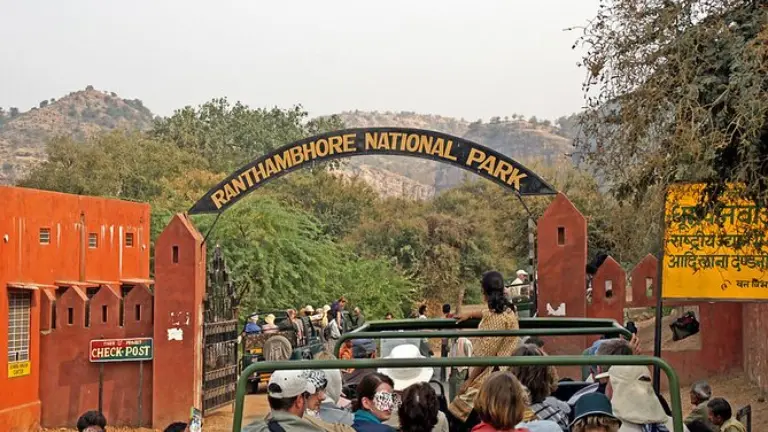
1. Forest and Vegetation.
Tourists to this park can see many dry deciduous forests with trees like dhok, banyan, and neem. These trees tend to offer food, shade, and shelter to many animals and birds for their survival.
2. Food Chain and Balance
The food chain in the Ranthambore National Park is very strong. There are grasses and plants that support herbivores, and on the other hand, carnivores rely on them for their survival. This balance keeps the ecosystem stable and healthy.
3. Water Ecosystem
For the survival of aquatic animals, lakes such as Padam Talao and Rajbagh Lake play a major role. These lakes serve as the lifeline, especially in summer when water becomes very limited.
4. Predator and Prey Relationship
Ranthambore is known for its predator-prey interactions. In this park, Predators control the population of herbivores. This helps to prevent overgrazing and keeps vegetation healthy.
5. Bird Life Diversity
Bird life diversity is another significant attraction of this park. There are over 300 species of birds that are both residential and migratory. Birds help with seed dispersal and maintain ecological balance.
6. Safari Experience in Ranthambore National Park
Ranthambore offers safari activities that help tourists to explore the park in the best way possible. Through safari, visitors can see the wildlife up close and have a memorable time of their lives.
What is Safari?
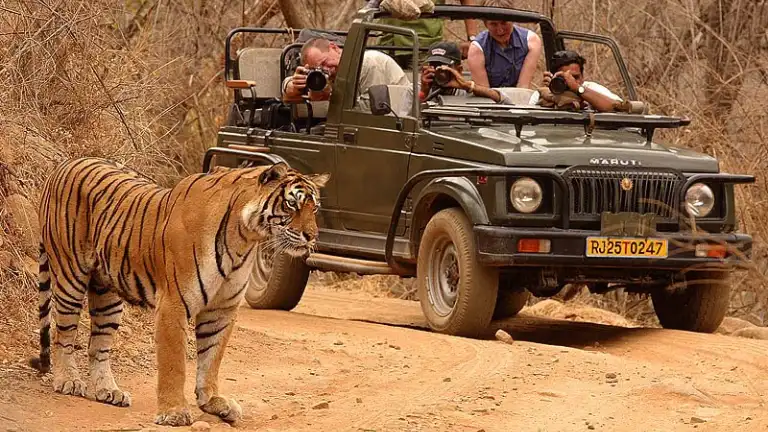
A safari in Ranthambore National Park is a type of guided wildlife tour that takes visitors inside the forest through specially permitted vehicles to have a sight of animals in their natural habitat. It is the main activity of the park and allows tourists to have a real jungle experience. This is a good activity for families and children.
The safari comes with a trained driver and an official forest guide who has a deep understanding of all the forest routes, animal behavior, and the best spots for sightseeing. These vehicles are usually Gypsies (jeeps) and are open on all sides. Small groups are usually taken through Gypies. On the other hand, canters (mini-buses) are used for larger groups. This allows for clear views and photography opportunities. Here is a detailed overview:
1. Types of Safari Vehicles
- Gypsy: Open jeep with 6 seats, best for small groups
- Canter: A larger vehicle with around 20 seats
2. Safari Timings
- Morning Safari: Around 6:00 AM – 10:00 AM
- Evening Safari: Around 2:30 PM – 6:30 PM
(Timings change slightly with seasons)
3. Safari Price (Approximate)
- Indian tourists: ₹800 – ₹1500 per person
- Foreign tourists: ₹1500 – ₹3000 per person
4. How to Book a Safari
- Online through the Rajasthan Forest Department website
- Through hotels or travel agents
- Advance booking is recommended.
5. Zones in Ranthambore
The park is divided into zones (1–10). Zones 1-5 are more famous for tiger sightings.
Tourist Attractions Nearby Ranathambore National Park
There is a range of interesting and adventurous places to visit near the Ranthambore National Park that visitors can explore alongside their safari trip. Let’s take a closer look at these places:
1. Ranthambore Fort
Ranthambore Fort stands as a historic structure that UNESCO has recognized as a World Heritage Site. This 10th-century structure displays the majestic architectural style that characterizes Rajasthan’s royal heritage. The fort contains historical gates, sacred temples, and ancient structures, which provide visitors with complete views of the surrounding forest. Therefore, this is a good place to visit for history enthusiasts and photographers who wish to study both heritage sites and natural environments.
- Entry Fee: Free
- Best Time: Morning visit
2. Surwal Lake
Surwal Lake serves as a peaceful and beautiful location that exists close to Ranthambore. Bird watchers consider this location their top choice as many migratory birds visit during the winter season. The peaceful environment, along with beautiful landscapes, presents the best environment for both relaxation and photography. Therefore, the location provides visitors with a good opportunity to spend peaceful moments away from the crowded safari areas.
- Entry Fee: Free
- Best Time: Winter mornings
3. Kachida Valley
Kachida Valley exists as a natural area that borders the national park and showcases both its wild landscape and beautiful natural scenery. Visitors can see panthers and sloth bears at this location, but actual animal sightings happen infrequently. The valley’s rocky landscape and greenery provide a peaceful environment for nature lovers and photographers. It is a good destination to visit if you want to spend your leisure time.
- Entry: Included in safari
- Best Time: During safari hours
4. Rajiv Gandhi Regional Museum of Natural History
Rajiv Gandhi Regional Museum of Natural History serves as an educational center that teaches visitors about the various wildlife species, forest areas, and biodiversity found throughout Rajasthan. The displays in this museum create natural ecosystem models, which visitors can learn about through simple educational content. Therefore, this spot serves as a learning center that benefits students and families, and all individuals who wish to learn about nature and environmental protection.
- Entry Fee: ₹50 approx
- Timings: 10 AM – 5 PM
5. Trinetra Ganesh Temple
The Trinetra Ganesh Temple stands as a prominent religious location within the boundaries of Ranthambore Fort. The temple, which honors Lord Ganesha, stands as one of Rajasthan’s most ancient religious sites. People from different corners of the world come to this place to receive sacred blessings. The temple provides visitors with both a spiritual experience and breathtaking views of the nearby forested areas. Morning pooja in this temple should not be missed as it provides an extremely enchanting experience.
6. Padam Talao
The extensive Padam Talao lake in Ranthambore serves as a primary location where people can observe wildlife. During the early morning hours, various animals, including tigers, deer, and crocodiles, can be found drinking water from the lake. The lake attracts visitors with its natural beauty and tranquil environment, which creates an exceptional experience during safari tours.
- Entry: Included in safari
- Best Time: Early morning
Best Time to Visit Ranthambore National Park
It is important to have a complete overview of the best time to visit the Ranthambore National Park. Consider if you are looking for pleasant weather or better chances of spotting tigers. Here is a detailed overview:
| Month Range | Weather | Experience |
| October – February | Cool and pleasant | Best for sightseeing and bird watching |
| March – April | Warm | Good chances of tiger sightings |
| May – June | Very hot | The highest chances of spotting tigers near water |
| July – September | Monsoon | Park mostly closed |
How to Reach Ranthambore National Park
Ranthambore is one of the most well-connected tourist spots in Rajasthan. One can easily plan their visit to this spot through different means of transportation. Let’s take a closer look:
1. By Air
The nearest airport to Ranthambore is Jaipur International Airport, about 180 km away. From there, tourists can easily take a taxi or a train to Sawai Madhopur. It is an expensive but convenient transportation mode to reach the park.
2. By Train
Train journeys are usually affordable compared to others. Sawai Madhopur Railway Station is the nearest station to the Park, which is just 10 km from the park. It is well-connected to major cities like Delhi, Mumbai, and Jaipur. Therefore, you can take a railway route for budget-friendly travel.
3. By Road
You can reach Ranthambore by road via Jaipur, Delhi, or Kota. Buses and taxis are easily available, and roads are in good condition. Moreover, there is convenience to take stoppage at any given point.
Travel Tips for Visitors Visiting Ranthambore National Park
Visitors who are planning their trip to Ranthambore National Park must consider the given tips below properly for a smooth visit. These include:
- Make sure to reserve your safari spot beforehand to avoid a last-minute rush, especially when visiting during peak season, when tickets get booked quickly.
- To avoid animal attraction and attention, make sure to wear something that merges with nature easily. You can choose comfortable and neutral colored clothes.
- For an easy travel, make sure to carry water, sunglasses, and sunscreen, especially when going with kids. The weather can get really hot during summers.
- Your guide understands the area and animal behaviour. So, make sure to follow their instructions for a better wildlife experience.
- Maintain silence during the safari to avoid disturbing animals. Making noise can increase the possibility of getting caught by the animals.
- Take a good camera or binoculars with you to capture wildlife moments and enjoy beautiful views.
- Wake up early for safaris as morning time provides a better chance of seeing active animals in the jungle.
Ranthambore National Park: A Go-To Destination for Wildlife Lovers
Ranthambore National Park in Rajasthan is one of the most widely preferred travel destinations for wildlife lovers across the country. This place provides a balance of everything, including adventure, history, and natural beauty. You can spot majestic tigers, ancient forts, birds, and flora & fauna in their most natural form. The park is easy to reach and has many nearby attractions to explore. Therefore, plan your tour properly to make sure it becomes one of the most memorable experiences of your life. Ranthambore surely promises an unforgettable jungle visit in the heart of Rajasthan.
Also Read – All Things You Need to Know About the Luxurious Royal Rajasthan On Wheels